


 Česky (CZK)
 Slovensky (EUR)
 Deutsch (EUR)
Infrared lighting
Infrared lighting for terrariums is used to provide thermal comfort and supplementary heating without significantly disturbing the normal routine of kept animals. It is especially suitable where heat needs to be delivered in a targeted and gentle way, for example during evening or night hours.
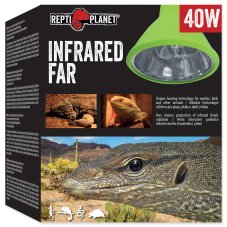
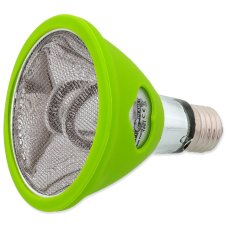
REPTI PLANET Far Infrared HEAT
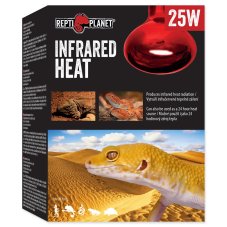

REPTI PLANET Infrared HEAT
Infrared lighting for terrariums: a gentle way to provide supplementary heat
Infrared lighting is a popular solution wherever heat needs to be added to a terrarium without using strong standard daylight-type lighting. In practice, it is often used as a supplementary heat source that helps maintain suitable temperature conditions while affecting the overall character of the environment less than regular lighting.
That is why infrared lighting is especially suitable in situations where it is necessary to maintain thermal comfort outside the main daytime lighting cycle.
When infrared lighting makes the most sense
Infrared lighting is especially useful where you need targeted or supplementary heating and at the same time do not want to rely on a standard light source as the main solution for warmth. It is often part of setups where temperature needs to be managed during the evening or night, or where heating should remain separate from the main daytime lighting.
Its advantage is that it helps provide heat in a way that is often gentler and more practical for the overall terrarium setup.
How it differs from heat emitters
Compared with heat emitters, infrared lighting is more often chosen where it is necessary to combine a heating effect with limited light impact. Emitters are typically associated with stronger radiant heat without standard visible light, while infrared solutions are often used as a separate category for more specific needs depending on the husbandry setup.
That is why it makes sense to view infrared lighting as a distinct type of heating that can complement other heating elements in the terrarium.
How to choose in this category
When choosing infrared lighting, it is important to consider mainly the size of the terrarium, the required heating effect, and the overall way it will be used during day and night. A product intended for mild supplementary warmth plays a different role from one that is meant to support a stable thermal regime in a specific area.
Examples in this category include:
- REPTI PLANET Far Infrared HEAT
- REPTI PLANET Infrared HEAT
These products make sense where the goal is to support heat in a targeted way and coordinate it with the rest of the terrarium equipment.
How infrared lighting fits into the whole system
Infrared lighting works best when it is part of a well-planned setup. What matters is how it will be combined with the main lighting, other heat sources, ventilation, and the size of the enclosure. The goal is not simply to add another warm point, but to create an environment that remains stable and practical for the animal throughout the day.
A well-chosen infrared heat source can therefore help complete a system that is functional, balanced, and practical for long-term use.
What to watch out for when choosing
When choosing infrared lighting, focus mainly on:
- the size and type of terrarium
- whether it should serve as the main or supplementary heat source
- its role during day and night
- how it works with other lighting and heating
- the need for local or gentler heating
- safe placement and proper control of operation
A well-chosen infrared lighting solution should not just add heat, but help create stable temperature conditions without unnecessary fluctuations.
Practical tip
If your main goal is supplementary heating outside the main daytime lighting period, infrared lighting is often a very practical choice. It works best when properly integrated into the terrarium’s overall thermal setup rather than used in isolation.